 Created by renowned Harvard health care professionals.


Braces for Carpal Tunnel: Why Rigid Braces Can Make CTS Worse in the Long Run
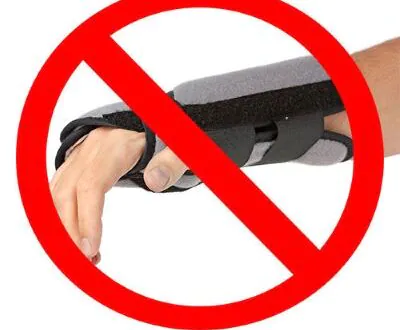
Rigid Carpal Tunnel Braces and Wrist Splints create a paradox in Carpal Tunnel Treatment. These immobilizing devices provide some relief in the beginning, but lead to muscle atrophy, injure soft tissue in the hand and wrist and make carpal tunnel worse in the long-run. Immobilization is good for fractures and sprains, but is the wrong approach for treating CTS. Our Medical Team recommend avoiding rigid braces and wrist splints except when doing brief periods of heavy lifting. A better first line of treatment for CTS, is The Carpal Solution Passive Stretching Treatment Kit that is comfortably worn during sleep and promotes natural healing with no muscle atrophy or receding of soft tissue.

Written by Jeff Conley, President of First Hand Medical · Clinically reviewed by Alan Ward, MOT, OTR, Master Occupational Therapist and Vice President of Precision Rehabilitation · Last reviewed: November 2026
Carpal tunnel braces are the first thing many people try, and they can ease pain from movement for a short time. This page explains what our doctors have seen with braces for carpal tunnel over two decades: the pros and cons, the carpal tunnel brace side effects that build up over time, such as muscle atrophy and restricted blood and lymph flow, and a better option that works while you sleep. If you are shopping for carpal tunnel syndrome braces, read this first.
Table of Contents
Carpal Tunnel Brace Pros and Cons at a Glance
Here are the carpal tunnel brace pros and cons our doctors weigh. On the plus side, a splint holds the wrist in a neutral position, which can reduce pain from movement, especially when the wrist bends during sleep. On the minus side, it does not promote healing from carpal tunnel syndrome; it only reduces pain from movement.
Carpal tunnel brace side effects to know about
The main carpal tunnel brace side effects come from immobilization and compression. Muscles weaken when they are not used: one study found about 8% loss of muscle size and 23% loss of strength after 14 days in a cast (Wall et al., Acta Physiologica, 2014). A tight brace also squeezes the hand, wrist and forearm, restricting blood circulation and lymph flow that the body needs to clear the swelling. Our medical team has seen splints give some relief at first, then aggravate symptoms over time.
Splinting for Carpal Tunnel Syndrome: How Braces Work and When to Skip Them
Splinting for carpal tunnel syndrome is often the first thing people are told to try. Here is how braces work, what a rigid splint really does, and how our doctors suggest you use one, if at all.
How Do Carpal Tunnel Braces Work?
How do carpal tunnel braces work? A brace holds the hand and wrist in a neutral position so the wrist does not bend while you sleep or work. That immobilization can reduce discomfort from movement. It does not promote healing from carpal tunnel syndrome. It only reduces pain from movement, and it does nothing to clear the swelling and entrapped inflammation that press on the median nerve.
Rigid Wrist Brace and Rigid Wrist Splint: What Holds You Still
A rigid wrist brace uses a metal or plastic stay, and a rigid wrist splint is often molded plastic. Both are built to stop the wrist from moving. That is great for fractures and sprains, but not for a chronic, recurring condition like CTS. Over time, holding the hand still leads to muscle atrophy in the forearm, thumb and fingers, and a tight splint compresses the hand and wrist, restricting blood circulation and lymphatic fluid exchange. In one study, 14 days in a cast cost about 8% of muscle size and 23% of strength (Wall et al., Acta Physiologica, 2014).
Splinting for Carpal Tunnel: What the Research Really Shows
Splinting for carpal tunnel can ease symptoms for a few weeks, which is short-term symptom relief, not healing. The latest reviews of splinting are cautious about its benefits, and the American Academy of Orthopaedic Surgeons’ 2024 guideline no longer lists splinting among its strong recommendations. Our medical team has observed that splints give some relief in the beginning but, in the long run, aggravate CTS symptoms. Read the details in What the Research Says About Splints.
Should I Wear My Carpal Tunnel Brace All the Time?
Should I wear my carpal tunnel brace all the time? No. Wearing a brace around the clock speeds up muscle atrophy and stiffness and slows the natural dispersion of swelling. Our doctors recommend avoiding rigid braces and wrist splints except for brief periods of heavy lifting, and using pillows to keep the wrists neutral during sleep.
A Better First Line of Treatment
Before anyone moves on to surgery, remember that carpal tunnel surgery has a patient satisfaction rate lower than 69%, because about 31% of patients report lingering or recurring symptoms, and no patient is satisfied with lingering symptoms. Instead of holding the hand still, the Carpal Solution gently stretches the soft tissue during sleep to relieve pressure on the median nerve and let lymph fluid clear the swelling. It has 97% patient satisfaction over two decades, and most people are better from their worst symptoms in two to three weeks.
Immobilizing Splints and Hand Braces Make Carpal Tunnel Worse?
Comparing braces for carpal tunnel? See our buyer’s guide to the best wrist brace for carpal tunnel, which compares six brace types side by side.
Our Doctors’ Position on Wrist Splints
A wrist splint holds the hand and wrist in a neutral position. That immobilization can reduce discomfort from movement, but it does not promote healing from carpal tunnel syndrome. It only reduces pain from movement.
The disadvantages are real. Immobilization causes muscle atrophy and stiffness. In one study, just 14 days in a cast cost about 8% of muscle size and 23% of strength (Wall, Acta Physiologica, 2014). A tight splint also compresses the hand, wrist and forearm, restricting blood circulation and lymphatic fluid exchange, which slows the dispersion of swelling and entrapped lymphatic fluid.
Because entrapped inflammation is the root cause of carpal tunnel syndrome, a treatment that slows its dispersion and weakens the muscles slows natural healing. Our medical team has observed that splints often give some relief in the beginning, but in the long run they aggravate carpal tunnel symptoms. Immobilization is great for fractures and sprains, but not for treating carpal tunnel syndrome. Splints provide temporary relief from movement, not a long-term solution.
What the Research Says About Splints, and Why We See It Differently
- American Academy of Orthopaedic Surgeons. Its 2016 guideline rated the evidence “strong” that immobilization improves patient-reported outcomes, measured as symptom scores over weeks. That fits our view that a splint reduces pain from movement; it did not measure healing, remission, muscle strength or circulation. The 2024 update evaluated only long-term, disease-modifying benefit, and splinting is no longer among its strong recommendations.
- Cochrane review of splinting (2023, 29 studies). Worn for under three months, splints may provide little or no benefit in symptoms and probably do not improve hand function, and the authors could not conclude that splinting benefits people with carpal tunnel syndrome (Karjalainen, Cochrane, 2023). That agrees with our doctors: splints do not heal it.
- Where we disagree. The Cochrane authors describe splints as low-risk with no plausible long-term harms, and note low-certainty hints of benefit after months of use. Our doctors disagree. Long-term immobilization causes muscle atrophy, which is well documented in disuse research even though the carpal tunnel trials did not measure it. The trials did not measure circulation, lymphatic flow or how long relief lasts after the splint comes off. And over two decades, our medical team has watched splinted patients get early relief, then worse symptoms. Until long-term trials measure those outcomes, we follow what the anatomy and our patients show us.
In orthopedic medicine few tools are used as much as splints and rigid braces for carpal tunnel. Orthopedic professionals, across the board, from physical therapists to surgeons, often reach first for a splint or one of the many braces for carpal tunnel to provide immediate relief from painful movement after a fracture or a ligament tear. It becomes instinctive and almost habitual.
These immobilizing devices stabilize broken bones, protect torn ligaments, and let damaged tissue heal without the disruption of ongoing movement. Millions of fractures and sprains are treated this way every year, and for good reason: it works for fractures and sprains caused by trauma.
For Carpal Tunnel Syndrome it is a different experience. It is ironic that the most recommended “Conservative First” treatment for CTS are immobilizing wrist splints, also sometimes called rigid hand braces or carpal tunnel syndrome braces.
Every pharmacy offers them, most doctors recommend them as the first line of defense for CTS. The reason we say it is ironic, is because immobilizing wrist splints and rigid braces for carpal tunnel help alleviate a little discomfort from movement in the beginning, but in our doctors’ experience, when they are used routinely over the long run, these devices can make carpal tunnel worse.

It does not make sense!” width=”540″ height=”161″ />Typical carpal tunnel wrist braces or splints that you find in pharmacies worldwide are immobilizing devices. Our medical team has found working with patients in our clinic over the last 20 years that these rigid devices help relieve discomfort from movement for the first couple of weeks, but in the long-run lead to muscle atrophy and injure soft tissue further.
These rigid devices provide no proactive healing therapy for carpal tunnel, they just immobilize the hand and wrist and the compression exerted by this immobilizing device blocks healing pathways and causes soft tissue to recede when worn on a routine basis.
It is well documented in the medical literature that immobilization has downsides. And when it is relied upon for too long, the negative effects become quite serious. Since Carpal Tunnel is a chronic recuring condition caused by trapped inflammation, immobilization is a poor treatment option.
Why Prolonged Immobilization with Splints Causes Harm
1- Blood circulation restriction
2- Lymphatic stagnation, inflammation buildup and chronic swelling (edema)
3- Muscle atrophy
4- Joint and connective tissue stiffness
5- Bone density loss (disuse osteoporosis)
6- Degrading of the sensory feedback loop leading to chronic clumsiness
7 – Receding Soft Tissue (appearance of visibly sunken-in with extreme cases)
8- Pressure sores on the skin under the immobilizing brace pressure points
Having rigid fiberglass or metal constantly pressing against the soft tissue and muscle of the hand and wrist actually injures soft tissue further, it restricts blood circulation and inhibits inflammation transport through lymphatic channels – All of which makes Carpal Tunnel worse over time.
This is why the expert doctors at First Hand Medical suggest that you avoid rigid braces for carpal tunnel and wrist splints, except when doing brief periods of heavy lifting. In our doctors’ experience, routine use of these immobilizing devices makes Carpal Tunnel worse.
How did immobilizing braces for carpal tunnel & wrist splints become so entrenched as a medical treatment for CTS, If They Don’t Work?
Indeed one has to wonder:
“How did these immobilizing devices become the primary over-the-counter
treatment offered in pharmacies and in medical clinics round the world,
when in the long run they make CTS worse.”
On cursory analysis, not a deep dive, it becomes clear why and how this has happened.
The Simple Answer to This Paradox is “A False Positive”
It turns out, and it is not surprising, that immobilization of an injured hand and wrist that is jammed with excess inflammation, relieves pain and discomfort from movement. So, usually the rigid wrist brace or hand splint will feel like it is helping when a patient first uses it. The instant reaction from the patient is:
“This feels good, finally some relief!”
However, as it turns out, some movement is essential for healing Carpal Tunnel Syndrome. Movement helps transport out the trapped inflammation. Historically, the lymphatic system in the body has been largely ignored by allopathic medicine. It has been the basis of many treatment approaches of “Eastern Medicine” so there is some aversion by allopathic medicine to acknowledge it as important, until recently. So, it is not surprising that it is generally under appreciated.
A Basic Appreciation of The Lymph System for Transporting Inflammation
The lymphatic system is the primary method that the body has for transporting excess inflammation. The Lymph System, unlike the blood circulatory system, has no pump. It relies on gravity and muscle movement to slowly, but steadily move excess inflammation loaded with waste to the kidneys and bowels for extraction. The Lymph System, essentially, is the waste treatment system of the body with no pump.
Since the root cause of CTS is trapped inflammation exerting pressure on the Median Nerve, understanding the Lymph System is really important to appreciate healing of this condition. Movement of muscles and changes in elevation of your hands (gravity), as wells a diaphragm movement during deep breathing are all key to create the internal forces necessary to move and allow normal drainage of this excess swelling in the hands.
Immobilizing the hand and wrist with restricting devices, prevents movement that is necessary to initiate natural healing. This is the primary reason splinting and rigid bracing inhibit the body’s healing processes and make CTS worse in the long run.
Immobilization With Splints and Braces for Carpal Tunnel Leads to Muscle Atrophy and Receding Soft Tissue
There is another important mechanism that explains this paradoxical phenomena of initial relief, while preventing healing and leading to poor outcomes that is the result of immobilization with CTS. Splints and restrictive braces for carpal tunnel, like a cast, also lead to muscle atrophy and receding soft tissue with continued use. While immobilization makes sense for temporary healing of fractures and sprains, it does not make sense for chronic recurring conditions, like CTS.
Loss of muscle and receding tissue will further complicate and delay recovery from Carpal Tunnel Syndrome and can become a serious issue that creates more pain in the long run. Some relief in the beginning, but more serious chronic pain in the long term. Not a good trade-off.
So, “the false positive” of initially getting some relief, leads to a poor long term outcome and often leads to invasive procedures, like surgery, which is not the best choice for a chronic recurring condition.
Fractured Bones Require Immobilization
Another explanation as to how the medical system gravitated to the wrong conclusion about immobilization as a treatment strategy for CTS, is the success the medical community has had with immobilization in the treatment of broken bones and sprains caused by trauma. Immobilization is necessary for broken bones, to allow the fractured bone to fuse back together and heal correctly.
It is also helpful with severe sprains caused by trauma to allow ligaments and soft tissue to reconnect. So, success in this related area of medicine, helped people to accept immobilization as a ready answer for all orthopedic and soft-tissue injuries.
However, Carpal Tunnel caused by trapped inflammation due to physical repetitive stress or resulting from excess systemic inflammation is very different from a sprain or a fracture of a bone caused by trauma.
It makes sense, when you think about it. If you have ever worn a cast to immobilize a broken bone. You have likely observed the loss of muscle and soft tissue on the arm or leg where the case was worn for just six weeks. Of coarse, it is essential to set and immobilize a fractured bone, to allow it to heal correctly.
It is worth putting up with the temporary loss of muscle and receding soft tissue to allow the fractured bone or sprain to heal. Immobilization has become the medical standard for successful treatment for short term temporary situations, like fractures and sprains.
It is different with a chronic recurring condition like CTS. Long-term use of a splint or rigid brace can lead to severe muscle loss and receding soft tissue that creates a lot of problems and potential complications. Without normal soft tissue cushioning the 27 bones in the hand and wrist, every movement becomes painful. Immobilization is not a viable long term treatment for a chronic recurring condition caused by trapped inflammation and excess swelling, like CTS.
Immobilization is the Wrong Approach for Carpal Tunnel Treatment
 As described above immobilization is the wrong approach for treating Carpal Tunnel Syndrome. The Muscle atrophy and receding soft tissue from immobilization is counter productive for Carpal Tunnel treatment. It is a set-back to the healing journey and is not recommended by our medical team. Immobilization seems good on the surface, but the benefits of immobilization are dwarfed by the risks of muscle loss, receding soft tissue and delays in healing. There is no reason to be exposed to this kind of risk.
Movement and Passive Stretching Helps to Jump-Start Natural Healing
Actually, the opposite is true. Not immobilization, but movement is actually good for promoting Carpal Tunnel healing. Movement combined with stretching helps to initiate the transport of trapped inflammation through the lymphatic distribution system. Movement and Stretching jump-start the body’s natural healing and disperses trapped inflammation. Trapped inflammation is the root cause of carpal tunnel.
Soft Tissue Passive Stretching Brace Is The Conservative First Treatment of Choice.
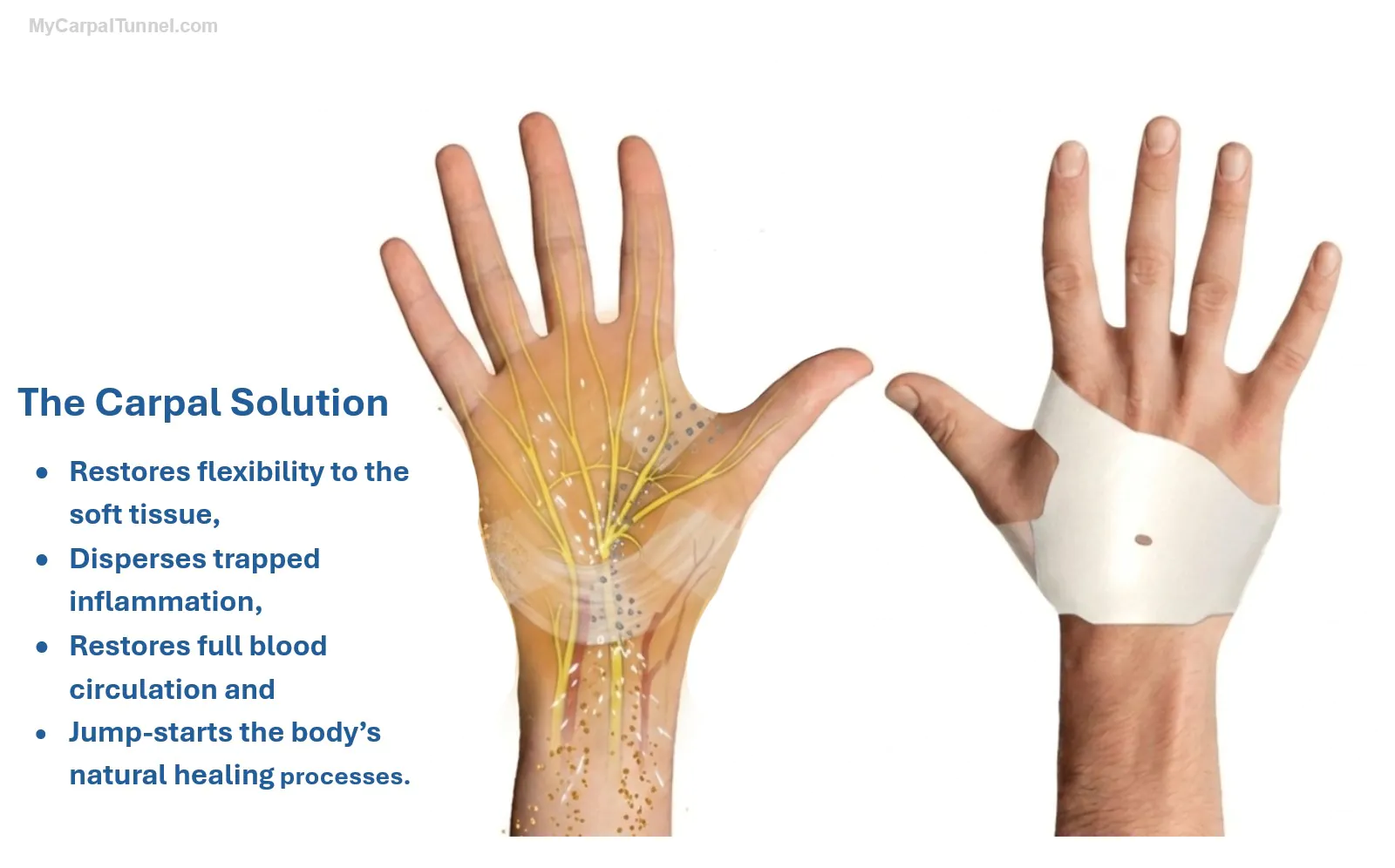
There is a Carpal Tunnel Wrist Brace that is a soft tissue stretching device which provides targeted stretching therapy to three key areas of the palm around the Carpal Tunnel passively during sleep. It has been put together into a 6 week treatment kit by expert doctors. This convenient kit usually eases your worst symptoms in two to three weeks, and about 90% of people get complete remission in six weeks within the 6-week protocol. This proactive Carpal Tunnel Therapy is called the Carpal Solution Treatment Kit.
The Carpal Solution is the optimal “Conservative First Treatment” for Carpal Tunnel Syndrome.
What are the advantages that the Carpal Solution soft wrist brace has over rigid immobilizing hand splints and wrist braces? First of all, Carpal Solution Therapy was developed by physicians with firsthand knowledge and years of experience treating CTS and It Works! It is easy to apply, and it is disposable, it does not cause muscle atrophy, or restrict blood circulation or cause irritation to already inflamed soft tissue.
The Carpal Solution disperses trapped inflammation and jump-starts natural healing. It treats the root cause of Carpal Tunnel. It just makes sense.
While other wrist supports and restrictive braces can accumulate moisture and perspiration during wear, the Carpal Solution is made of Hypoallergenic (No Latex) materials and that are porous and breathable and never accumulates offensive odors and does not cause irritation that is common with rigid devices that tend to be a collection point for microbes and fungal activity.
Since the Carpal Solution is thrown away after each use, one does not have to be concerned with these nagging issues associated with permanent wrist supports.

Immobilizing braces and supports can actually exacerbate CTS symptoms, since they compress already injured soft tissue, thereby constricting circulation and further inhibiting the body’s natural ability to heal from the trauma to the soft tissue of the hand inflicted by CTS. These rigid supports do relieve pain due to movement , but often result in muscle lose and long-term hand and wrist weakness that can be difficult to rebuild.
The Carpal Solution Stretching Braces Disperse Trapped Inflammation, The Root Cause of CTS.
The Carpal Solution, on the other hand, encourages muscle development, restores blood circulation and lymphatic fluid exchange, disperses inflammation and rejuvenates flexibility of injured soft tissue. It reduces swollen tissue and gets the body back to its natural healing cycle by opening up the constricted area and reducing compression of the fascia tissue surrounding the Carpal Tunnel. You can review the clinical data supporting this rapid Carpal Tunnel relief and learn why over 97 percent of patients who implement the carpal tunnel solution methodology experience soothing relief from the worst symptoms in two to three weeks and complete remission in 6 weeks.
Once CTS is in remission, your body keeps it in remission for about 5 to 7 years for most people, and as long as 17 years for some.
The Carpal Solution Carpal Tunnel Stretching Brace is a Solution for CTS for Life.
When CTS comes back, you simply repeat the easy 6 week treatment protocol at night during sleep. The Carpal Solution Treatment Kit is a solution for Carpal Tunnel for life.

RISK FREE 30-Day Satisfaction Window
The ONLY treatment for carpal tunnel that comes with a no questions asked 30-Day Satisfaction Window and in-house dedicated pain relief team.
Comfort is Important When Wearing A Wrist Brace or Any Orthotic Device During Sleep.
As a nighttime soft brace, the Carpal Solution offers other advantages as well. There are no rigid, stiff pieces to annoy or disturb yourself or your partner at night. Plus, the Carpal Solution travels conveniently.
Finally, if for whatever reason you are dissatisfied, the Carpal Solution comes with a 30-Day Satisfaction Window.
You Can Use The Carpal Solution Stretching Kit While You Wait for Your Doctor’s Appointment.
There is no reason to suffer for another day. You can get started today treating your Carpal Tunnel naturally without any risks or downtime or fear of complications. The Carpal Solution Kit was developed by Doctors and is designed to jump-start your body’s natural healing. Who knows? – You might be all better by the time the doctors appointment rolls around.
Education is your number-one weapon against the ravages of carpal tunnel syndrome. You should discuss your condition with your physician and confirm your self-diagnosis soon. You can also browse our website to read real testimonials based on firsthand experience by CTS sufferers and read the articles written by our medical team. This website is written with the intent to help people heal naturally from this chronic recurring condition and avoid invasive procedures, like surgery if they can.
The Carpal Solution is a better first line of defense to CTS.
This remarkable new kind of wrist brace makes for a solid strategy for preventing carpal tunnel symptoms from disrupting your life.
Over 100,000 people have used the Carpal Solution over two decades to jump-start their body’s natural healing, with 97% patient satisfaction and 4.9 out of 5 stars from patients on independent review sites like Google Reviews. Neurologists, including Dr. James S. Zu, MD, PhD, of Edison, New Jersey, call the Carpal Solution a better first line of defense for Carpal Tunnel Syndrome.
Patients simply call it: “My Carpal Tunnel “Cure”!”
Click to “Like Us” on Face Book and read what real people who have used the Carpal Solution have to say about this remarkable Carpal Tunnel Treatment.
You can view more detailed video user reviews of The Carpal Solution in 7 different languages on our YouTube video channel called: MyCarpalTunnelSolution
Learn more about Carpal Tunnel Wrist Braces
What the Research Says About Braces for Carpal Tunnel
To be fair to splints, the published research does show they help some people. In a review of published studies, about 30% of patients treated with wrist splinting reported significant improvement in their symptoms (Bland, Muscle & Nerve, 2007). Wearing a neutral splint at night is a common first recommendation, because it stops the wrist from curling during sleep.
Our doctors’ view is that braces for carpal tunnel are a short-term comfort measure, not a treatment. A brace holds the wrist still, but it does not stretch the tight tissue that crowds the median nerve, and in their experience, rigid braces worn routinely, especially during the day, can lead to the stiffness, weakness and poor circulation described above.
Braces for Carpal Tunnel vs. the Carpal Solution
- What it does: a brace holds the wrist still; the Carpal Solution gently stretches the tissue around the carpal tunnel while you sleep.
- Movement: rigid braces limit movement; the Carpal Solution is worn at night, so your hands are free all day.
- Circulation: tight or rigid braces can restrict blood flow and lymph fluid exchange; the Carpal Solution is designed to improve circulation to the hand.
- Results: about 30% of splinted patients report significant improvement (Bland, 2007); with the Carpal Solution, about 90% of people get complete remission in six weeks, and it has earned 97% patient satisfaction over two decades, with 4.9 out of 5 stars on independent review sites like Google Reviews.
“The reason that I like the Carpal Solution is that we are doing more than just trying to hold that wrist in a static position. We’re actually trying to create a biological change in the body, change the anatomy.” — Alan Ward, MOT, OTR, occupational therapist
How to Use Braces for Carpal Tunnel Safely if You Choose One
If you already use a brace, or your doctor has recommended one, these steps help you avoid the downsides:
- Choose a soft brace that keeps the wrist straight, not bent up or down.
- Wear it mainly at night, not all day.
- Keep the straps snug, not tight. Loosen it if your fingers feel cold, look pale or tingle more.
- Take it off during the day and move your hands gently, so muscles stay strong and fluid keeps moving.
- Reserve rigid bracing for brief periods of heavy lifting, as our doctors suggest.
- If you are not better after a few weeks, do not just keep bracing. Talk with your doctor about the next step.
When Healing Needs a Doctor’s Help and Professional Medical Evaluation
- Constant numbness that does not improve or loss of feeling in the fingertips that does not improve in 4 to 8 weeks.
- Extreme loss of the muscle at the base of the thumb, with loss of grip strength that does not improve over 6 to 8 weeks.
- Worsening symptoms over 6 to 8 weeks while using the best conservative treatments
- Symptoms that begin suddenly after hand or wrist trauma, a fracture or severe sprain from a fall or auto accident.
- Odd Symptoms that are not consistent with the Carpal Tunnel Symptoms listed on this website, that might be indicative of other nerve issues. A nerve conductivity study can clear up the confusion with minimal costs and not too much pain and no risk.
These signs may mean more advanced nerve involvement or a different condition and deserve professional medical evaluation and in person consultation. Home treatment can be used alongside professional in-person medical care while you wait for the healthcare delivery system to fit you into their schedule. There is no reason to wait doing nothing. You can start proven natural conservative treatment with good patient reviews while you wait for your appointments. If your symptoms start improving over 6 to 8 weeks, then you know you are on the right track and surgery is not necessary.
Braces for Carpal Tunnel: Frequently Asked Questions
Do braces for carpal tunnel work?
They can ease symptoms for some people, especially when worn at night. About 30% of patients treated with splinting report significant improvement. But a brace only holds the wrist still; it does not treat the cause.
Should I wear a carpal tunnel brace all day?
Our doctors advise against routine all-day use of rigid braces, because long periods of immobilization can lead to stiffness, weakness and poor circulation. Use rigid support only for brief periods of heavy lifting.
What is the best wrist brace for carpal tunnel?
A soft brace that keeps the wrist straight and is snug but not tight. See our buyer’s guide, which compares six brace types side by side.
Is there a carpal tunnel cure?
No. Carpal tunnel syndrome is chronic and recurring and cannot be cured, by surgery or anything else. The Carpal Solution is the next best thing, controlling symptoms at home without downtime, risks, scar tissue or complications.