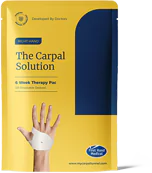
 Created by renowned Harvard health care professionals.



Written by Jeff Conley, President of First Hand Medical · Clinically reviewed by Alan Ward, MOT, OTR, Master Occupational Therapist and Vice President of Precision Rehabilitation · Last reviewed: November 2026
Table of Contents
Carpal Tunnel Wrist Support: What Works and What Does Not
A carpal tunnel wrist support can steady the joint, but a support that holds the wrist still for long periods leads to muscle atrophy over time and slows recovery. Many people look for a carpal tunnel wrist support that eases pressure on the median nerve without limiting daytime movement.
Are you looking for a reliable solution to your long-standing carpal tunnel syndrome symptoms?
If so, you have a lot of company, carpal tunnel surgery has one of the lowest patient satisfaction rates in medicine. Conventional health care approaches have come up short for most patients because they start with seeking pain relief through medication, then try compressive rigid wrist supports and usually end up with the patient being recommended for surgery.
Surgery has a patient satisfaction rate lower than 69%; about 31% of patients report lingering or recurring symptoms after surgery (Bland, Muscle & Nerve, 2001), and no patient is satisfied with lingering symptoms.
One key component of effective carpal tunnel syndrome treatment is soft tissue revitalization.
The Carpal Solution, a product developed by physicians working with leading medical device engineers and materials specialists at First Hand Medical, provides a full-spectrum approach as a wrist support system.
You strap on the Carpal Solution at night before you go to sleep, and the brace works within a delicate range of tension while you rest to massage and decompress injured tissue.
Ask your doctor which carpal tunnel wrist support fits your symptoms and daily routine.
When you wake up in the morning, you may feel the gentle stretch working; relief of the worst symptoms often begins in two to three weeks. Dr.
Morgan recommends that you then go about your day with as much activity as you can tolerate. Normal use of your hand is one of the best ways to rehabilitate the hand and forearm muscles. Active use also stimulates blood circulation.

Carpal Tunnel Wrist Support: What to Expect From Each Option

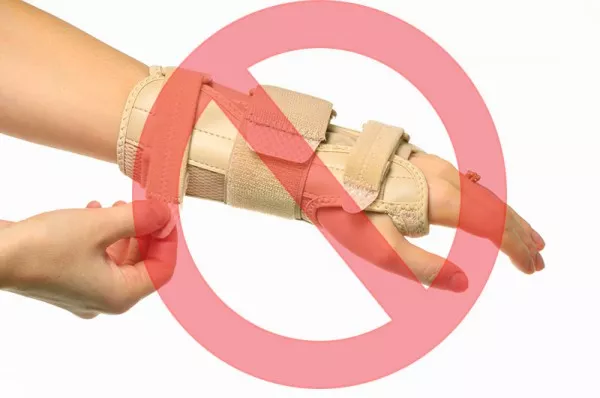
A rigid carpal tunnel wrist support has a place for short-term support. In a review of published studies, about 30% of patients treated with wrist splinting reported significant improvement in their symptoms (Bland, Muscle & Nerve, 2007). A rigid support holds the wrist still, but it does not stretch the tight tissue that crowds the median nerve.
The Carpal Solution works differently. In our doctors’ two decades of experience:
- The six-week protocol gives over 220 hours of gentle, targeted stretching while you sleep.
- Relief of the worst symptoms often begins in two to three weeks.
- Over 90% of patients resolve their symptoms within six weeks. About 10%, often people with excess inflammation in the body, need 8 to 12 weeks.
- It has a 97% patient satisfaction rate and 4.9 out of 5 stars on independent review sites like Google Reviews.
Everyone has to wait in the healthcare system; the average new-patient doctor appointment takes 31 days (AMN Healthcare, 2025). You can start a safe carpal tunnel wrist support therapy at home while you wait. Read more in The Waiting in Healthcare. Comparing options? See Wrist Support vs Splint for Carpal Tunnel.
Well-informed health care consumers will want to browse MyCarpalTunnel.com for firsthand descriptions how the Carpal Solution works. You can also examine the facts and data about the debilitating condition. By learning as much as possible about CTS, you will increase the likelihood of a full and complete recovery. Carpal Solution therapy works!
Order today and take your life back!
Of course, while the Carpal Solution has been a critical component in the recovery of thousands of chronic CTS sufferers, we at First Hand Medical encourage a comprehensive medical approach to carpal tunnel syndrome.
You should work with your doctor or hand therapist to confirm the CTS diagnosis and develop an ergonomic work environment, a regimen of stretching and strengthening, diet and a healthy lifestyle to prevent routine flare-ups and set up an optimum environment of continuous tissue healing. The Carpal Solution is a key part of total hand health. Visit www.HandHealth.info to ask Dr.
Morgan questions directly.
Ergonomic improvements in the work station or improvements in the hand use pattern and daytime stretching exercises can also help. Sometimes supports can be part of the ergonomic approach. But care should always be used when exposing any part of the body to a rigid device for a long period of time to treat a chronic condition like CTS.
Splinting or casting of any limb results in muscle atrophy over time; in one study, healthy adults lost about 8% of muscle size and about 23% of strength after just 14 days in a cast (Wall et al., Acta Physiologica, 2014).
The Flexible stretching brace approach of the Carpal Solution is much more effective than rigid hand supports or wrist supports strapped to the hand, wrist and forearm.
Our Doctors’ Position on Wrist Splints
A wrist splint holds the hand and wrist in a neutral position. That immobilization can reduce discomfort from movement, but it does not promote healing from carpal tunnel syndrome. It only reduces pain from movement.
The disadvantages are real. Immobilization causes muscle atrophy and stiffness. In one study, just 14 days in a cast cost about 8% of muscle size and 23% of strength (Wall, Acta Physiologica, 2014). A tight splint also compresses the hand, wrist and forearm, restricting blood circulation and lymphatic fluid exchange, which slows the dispersion of swelling and entrapped lymphatic fluid.
Because entrapped inflammation is the root cause of carpal tunnel syndrome, a treatment that slows its dispersion and weakens the muscles slows natural healing. Our medical team has observed that splints often give some relief in the beginning, but in the long run they aggravate carpal tunnel symptoms. Immobilization is great for fractures and sprains, but not for treating carpal tunnel syndrome. Splints provide temporary relief from movement, not a long-term solution.
The Carpal Solution has been used by over 100,000 people in over 30 different countries and continues to earn 97% patient satisfaction among patients. Neurologists, including Dr. James S. Zu, MD, PhD, of Edison, New Jersey, call the Carpal Solution a better first line of defense for Carpal Tunnel Syndrome.
Patients simply call it: “My Carpal Tunnel “Cure”!”
You can view more detailed video user reviews of The Carpal Solution in 7 different languages on our YouTube video channel called:MyCarpalTunnelSolution
You can learn more about Carpal Tunnel Wrist Supports and Straps
A Patient’s View of Carpal Tunnel Wrist Support
Anthony is a network engineer in New Jersey who has worked 10 to 16 hours a day at a computer for about 20 years. Before the Carpal Solution, he tried ergonomic mice, wrist bands, a harness wrist brace and hand splints. “I’d wake up with my hands cramped,” he remembers.
The difference he noticed was comfort and movement. “Unlike the wrist brace, where you can’t move your hand and it’s noisy and really difficult to sleep, this is real soft,” he says. He followed the six-week nightly program, and “in literally a month and a half the pain was starting to go away.” Today he uses a few nights of treatment after heavy work weeks. Individual results vary.
How To Choose a Carpal Tunnel Wrist Support
- Match the tool to the job. A rigid support is for short, specific tasks, not all-day wear.
- Protect your muscles. The longer a rigid support holds the wrist still, the more muscle atrophy you risk.
- Treat the cause at night. Night is when your hand is relaxed and when symptoms often wake you, so it is the best time for gentle stretching therapy.
- Keep moving by day. Normal hand use rebuilds muscle and boosts blood circulation.
- Track results. Count the nights you wake up and how long you can type or grip before symptoms start.
- Know the red flags. Constant numbness, weakness or thinning at the base of the thumb need a doctor’s evaluation.
Carpal Tunnel Wrist Support: Common Questions
Should I wear a carpal tunnel wrist support all day?
No. A rigid wrist support worn all day keeps the hand from moving, and splinting or casting of any limb results in muscle atrophy over time. Dr. Morgan recommends normal, active use of the hand during the day, because movement helps rebuild the hand and forearm muscles and boosts blood circulation.
Can I use a wrist support with the Carpal Solution?
Yes, for short, specific tasks. Some people use a light support during a heavy lifting job, then go back to normal movement. The Carpal Solution does its work at night, while your hand is relaxed.
Do compression gloves count as a wrist support?
They are a different tool. Compression gloves worn during the day can spur natural healing by increasing blood circulation, and they insulate the hand from everyday bumps and bruises. Compression gloves by day with the Carpal Solution at night is one of the best combination therapies for these gloves. See Do Carpal Tunnel Gloves Work?
How soon will I feel better?
In our doctors’ experience, relief of the worst symptoms often begins in two to three weeks of the six-week protocol, and over 90% of patients resolve their symptoms within six weeks. If you have constant numbness, weakness, thinning of the muscle at the base of the thumb, or symptoms that began after an injury, tell your doctor’s office so they can see you sooner.
Do I need a diagnosis first?
Our doctors’ experience over two decades shows that people with three or more of the symptoms listed on this website can be about 95% confident they have carpal tunnel syndrome. This is clinical experience, not a published statistic. You should still get an in-person evaluation and a formal diagnosis from a doctor, and you can start a natural, non-invasive treatment like the Carpal Solution while you wait.
When Healing Needs a Doctor’s Help and Professional Medical Evaluation
- Constant numbness that does not improve or loss of feeling in the fingertips that does not improve in 4 to 8 weeks.
- Extreme loss of the muscle at the base of the thumb, with loss of grip strength that does not improve over 6 to 8 weeks.
- Worsening symptoms over 6 to 8 weeks while using the best conservative treatments
- Symptoms that begin suddenly after hand or wrist trauma, a fracture or severe sprain from a fall or auto accident.
- Odd Symptoms that are not consistent with the Carpal Tunnel Symptoms listed on this website, that might be indicative of other nerve issues. A nerve conductivity study can clear up the confusion with minimal costs and not too much pain and no risk.
These signs may mean more advanced nerve involvement or a different condition and deserve professional medical evaluation and in person consultation. Home treatment can be used alongside professional in-person medical care while you wait for the healthcare delivery system to fit you into their schedule. There is no reason to wait doing nothing. You can start proven natural conservative treatment with good patient reviews while you wait for your appointments. If your symptoms start improving over 6 to 8 weeks, then you know you are on the right track and surgery is not necessary.

Order Your Six Week Carpal Tunnel Treatment Now
The ONLY treatment for carpal tunnel that comes with a no questions asked 30-Day Patient Satisfaction Guarantee and in-house dedicated pain relief team.
Sources
- Bland JD. Treatment of carpal tunnel syndrome. Muscle & Nerve, 2007;36:167–171.
- Bland JD. Do nerve conduction studies predict the outcome of carpal tunnel decompression? Muscle & Nerve, 2001.
- Wall BT, et al. Substantial skeletal muscle loss occurs during only 5 days of disuse. Acta Physiologica, 2014.
- AMN Healthcare. 2025 Survey of Physician Appointment Wait Times.
About the word “cure”: Carpal tunnel syndrome is a chronic, recurring condition that cannot be cured. The Carpal Solution is the next best thing: it lets you control symptoms conveniently at home, without downtime, surgical risks, scar tissue or complications. Read more in Carpal Tunnel “Cure”: The Honest Truth and a Plan for Life.